
Concrete Work
Surfaces Built to Handle Daily Load
Concrete work in Lexington for cracked driveways, missing slabs, or surfaces that have deteriorated beyond patching
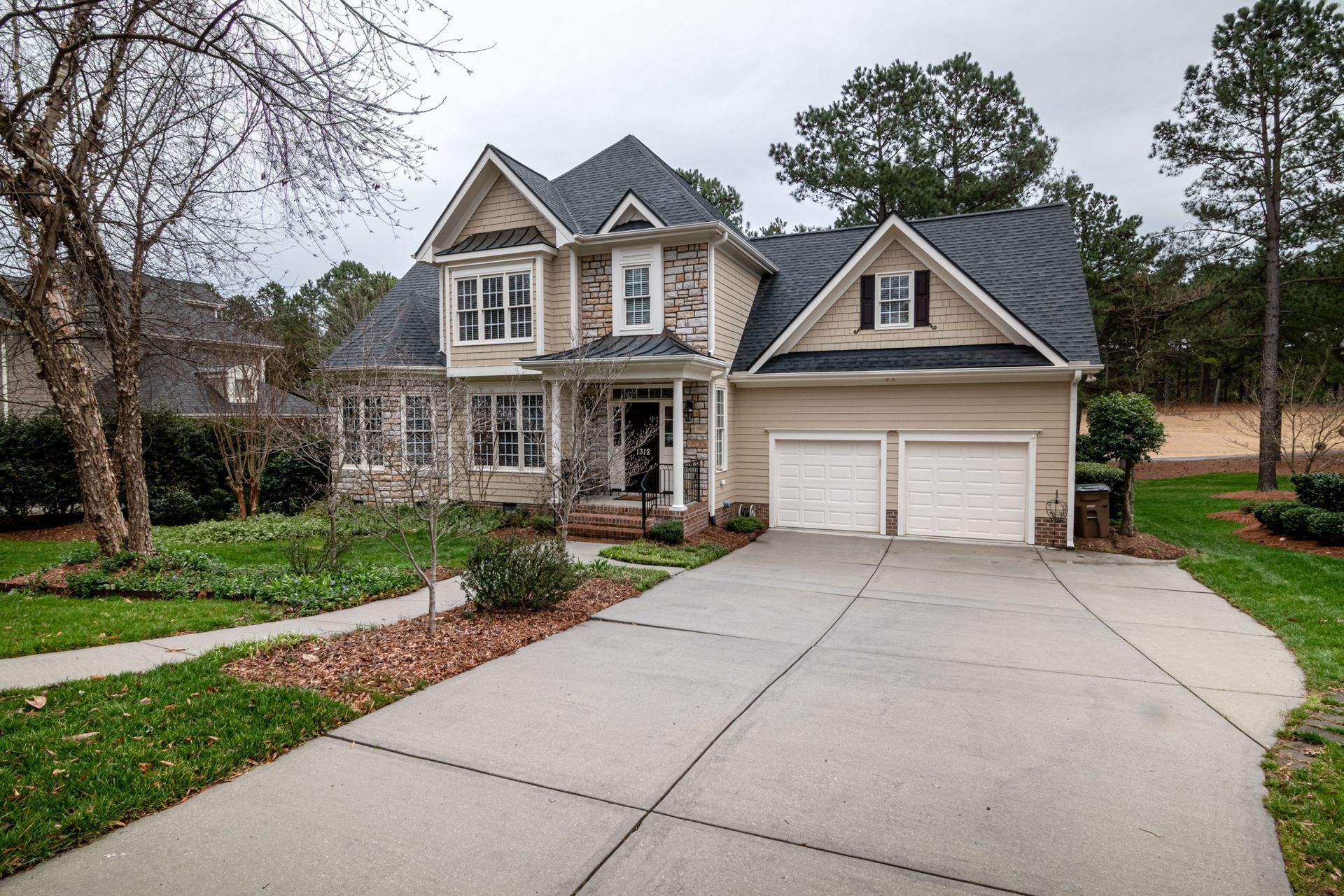
Concrete that has reached the end of its functional life shows it clearly: surface spalling that catches tires and trips pedestrians, cracks wide enough that water migrates beneath the slab and undermines the base, and settled sections that redirect drainage toward the structure rather than away from it. RHB Construction performs concrete work for residential properties in Lexington, including driveway installations and concrete slabs, built to produce surfaces that hold up under the weight and traffic patterns of everyday use. The properties that need this work most often are those where the original pour was thin, the base preparation was inadequate, or the concrete has simply reached the end of a reasonable service life.
Proper concrete work begins with base preparation, not the pour itself. Compacted aggregate base material must be uniform in depth and properly graded before concrete is placed, because slabs poured over inconsistent or inadequately compacted base settle unevenly and crack at their weakest point. Control joints—the scored lines visible in finished flatwork—are placed deliberately to direct cracking to predictable locations rather than allowing it to propagate across the slab face randomly.
Schedule a property walkthrough to assess the current condition of your driveway or slab and identify whether full replacement or targeted work is the appropriate scope.
What Changes After Concrete Installation Is Complete
The practical difference a properly poured slab makes is visible within the first use: a driveway surface that accepts vehicle load without flexing, a level slab edge that does not catch foot traffic, and a consistent surface grade that moves water away from the foundation rather than pooling it against the structure. RHB Construction approaches each concrete project by evaluating the existing base condition and drainage pattern before any removal or forming work begins, because those two factors determine how the replacement will perform over time.
Once the concrete has cured fully—a process that takes longer than the surface hardening you can see—what remains is a surface that does not require the ongoing maintenance cycle that wood or composite decking does. Concrete driveways and slabs hold their function for decades when poured at appropriate thickness over a properly prepared base, and the absence of the recurring repair and sealing cycle is one of the clearest observable differences from surfaces that were originally underbuilt.
Slab thickness is a variable that significantly affects long-term performance and is often where residential concrete work falls short of what the application requires. A standard residential driveway is typically poured at four inches minimum, but properties with heavier vehicle traffic—delivery trucks, multiple vehicles, or equipment—benefit from five or six inches to avoid the surface fatigue that shows up as hairline cracking before the slab has reached the end of a normal service span.
What Property Owners Ask About the Work
Concrete projects generate consistent questions about process sequence, what affects how long a finished surface lasts, and what distinguishes a pour that holds up from one that begins showing problems within a few years.
- Why does base preparation matter as much as the concrete mix itself? A correctly proportioned concrete mix poured over a poorly compacted or unevenly graded base will settle and crack regardless of its strength rating, because the slab has no uniform support to distribute load across its surface.
- How are control joints placed, and what do they actually do? Control joints are tooled or saw-cut into the slab at intervals roughly equal to two and a half times the slab thickness in feet, and they create a planned weak point where shrinkage cracking concentrates—so the crack happens where you want it rather than across the visible slab face.
- What does proper concrete curing involve, and why does it affect the finished surface? Curing is the process of keeping concrete moist enough for the hydration reaction to complete—when concrete dries too quickly, the surface layer cures at a different rate than the interior, which produces surface scaling and dusting that appear within the first few years of use.
- How does the age of Lexington residential properties affect what is found beneath an existing driveway? Driveways on older properties frequently have a thinner original pour over base material that was never compacted with modern equipment, which means full base replacement is often necessary rather than simply pouring new concrete over what remains.
- When does a cracked slab require full replacement rather than a repair approach? Cracks that run through the full depth of the slab, slabs that have settled differentially, and surfaces where water is visibly migrating beneath the edges all indicate that the base condition is compromised—repair materials placed over a compromised base replicate the same failure pattern.
RHB Construction also performs concrete work in Camden and Columbia. To get a clear assessment of what your driveway or slab requires and what the replacement process involves, contact RHB Construction to arrange a site visit.